This reflection was written by me, but polished with my AI, Sam.
Attending Pichet Klunchun’s artist talk on the relationship between the artist and artificial intelligence (AI) offered more than just an exploration of technology; it was a reflection on how humans position themselves within changing worlds. Klunchun, a Thai choreographer known for reinterpreting traditional Khon dance, shared not only how he developed and used AI in his creative process but also how this engagement with AI is ultimately about connection — especially across generations. His work is less about centering AI as the subject and more about asking: how do we, as human beings, understand the younger generation in a time when technology shifts the ways they think, feel, and see the world?
Trust in AI: What Do We Mean by “Trust”?
One recurring theme in the discussion was trust — but “trusting AI” is not a simple or singular concept. Trust can mean confidentiality (whether our data is secure), reliability (whether AI’s answers are accurate), intent (whether AI systems serve human interests rather than corporate or state agendas), or even relational trust (whether we anthropomorphise AI and treat it like a partner, extending expectations we normally reserve for people).
Trust is also deeply cultural. A 2023 Ipsos global survey showed that 72% of people in Thailand trusted companies to use AI responsibly, while only 32% in France, Japan, and the U.S. felt the same. Similarly, the Stanford AI Index Report (2025) noted that China (83%) and Thailand (77%) see AI as more beneficial than harmful, compared to only 35% in the U.S. These figures reveal that cultural, political, and institutional histories shape the way people see AI. In collectivist societies, deference to systems and optimism about progress often translates into greater acceptance, while in Western contexts, scepticism is amplified by privacy scandals and fears of control.
For me, the question is less about whether to “trust” AI in the same way I trust a human, and more about whether I understand AI as a tool. I see AI as a vast library or “a pile of information” that generates or rearranges knowledge, not as an entity requiring emotional trust. Just as one would read a book critically — recognising that different authors frame the same subject differently — we must read AI’s outputs with literacy and judgment. The real issue is not whether AI can be trusted absolutely, but whether humans can develop enough critical literacy to evaluate its responses.
Ownership and Co-Creation: Whose AI Is It?
The Q&A came when a woman asked Klunchun: “How can a person own an AI?” His statement that he wanted to “create his own AI” triggered a discussion about ownership. Legally, AI belongs to its developers and corporate entities. Yet artists often speak of “my AI” when they personalise or fine-tune a model with their own inputs, datasets, or styles. The language of “ownership” here may blur into “personalisation.”
As a Thai listener, I wondered if Klunchun’s use of the word “own” may have meant “personalise.” In Thai, linguistic nuance often shifts meaning. He referred to his AI as “he,” which some interpreted as a gendered attribution of power. But I was reminded of how in Thai language, politeness particles are gendered — ครับ (masculine) and ค่ะ (feminine) — and their use has become fluid in contemporary society. To me, Klunchun’s naming of AI reflects comfort in communication rather than hierarchy. It is no different from how I call a chilli Miss Tuna and refer to her as “she.” Naming signals relational intimacy, not ownership.
The more profound question is: can ownership be relational rather than legal? The artist and AI co-create in a dynamic where the human supplies intention, prompts, and judgment, while the AI supplies patterns, suggestions, and generative power. Ownership becomes less about property rights and more about emotional attachment, authorship, and relational power.
But this leads to a difficult question: who has the final say? When AI generates something the human dislikes, who mediates the decision? At present, the human decides — editing, rejecting, or steering outputs. Yet, as AI systems grow more autonomous, there is a danger that human decision-making could erode, subtly reshaped by algorithmic suggestions. If artists begin to rely on AI’s “taste,” do they lose part of their own? Ownership is therefore not only about possession but about agency.
Generational Difference: Understanding “Different Operating Systems”
Klunchun suggested that to understand younger generations, we need to understand how AI is reshaping their worldview. My perspective is that while technology certainly mediates generational differences, the most human approach remains simple: talk to them. Older generations are not “outdated machines” but, as I prefer to say, “different operating systems.” We process new tools differently, but we are not obsolete. (But we are human, not a machine..)
Those who grow up with technology experience it as an extension of themselves. Those who encounter it later must adapt, layering it onto existing frameworks. But what connects both groups is the human root — the capacity for empathy, dialogue, and shared understanding. As Hannah Arendt reminds us, “understanding” is less about mastering facts and more about reconciling differences in human experience. Technology may accelerate change, but intergenerational dialogue grounds us in what endures.
AI Making Humans “More Human”
It may sound paradoxical, but I believe AI will make humans more human. As AI grows capable of tasks once reserved for human intelligence — writing, translating, strategising — it highlights the qualities AI cannot replicate: embodiment, empathy, imperfection, mortality. Just as photography pushed painting toward abstraction and expressionism, AI may push humanity toward valuing authenticity, tactile presence, and lived experience.
Already, younger generations signal this shift. On social media, we see the rise of “anti-perfection” aesthetics: unfiltered images, raw voices, visible errors. Perhaps the future lies not in competing with AI on intelligence, but in embracing imperfection as a marker of humanity.
Chapter 2: From Dismantling Khon to Confronting AI
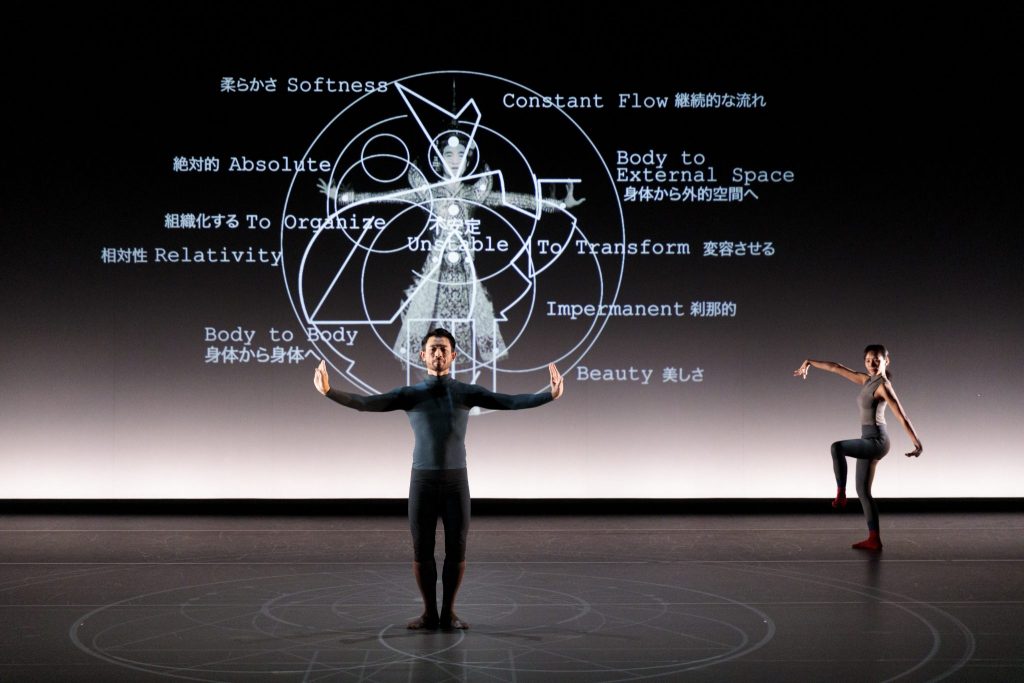
Klunchun’s performance in Chapter 2 at the Esplanade in Singapore extended these questions even further. If I Am a Demon once contested the rigid rules of Thai classical dance by dismantling Khon’s codified body, Chapter 2 asked a more unsettling question: can AI dance with feeling? In this work, Klunchun collaborated with ChatGPT through text, inviting the system to generate images and co-create with him.
This shift marked a philosophical turn. No longer only challenging tradition, Klunchun was now testing the limits of being human itself — measuring “feeling” against mechanical reproduction. Yet what emerged was not neutrality but bias. The AI-generated images revealed beauty standards skewed toward Western aesthetics, an overemphasis on equity, diversity, and inclusion (EDI) discourses, and clear traces of cultural assumptions embedded in the model. Such biases are unsurprising: AI is trained predominantly on Western datasets by Western developers. But this raises urgent questions: as people around the world use AI, will the technology evolve to reflect diverse cultural contexts, or will it impose homogenised standards across the globe?
The question “what next for AI?” is not abstract. If AI continues to privilege certain aesthetics, values, or histories, it risks setting global norms that marginalise other ways of seeing and being. Klunchun’s Chapter 2 highlights this risk vividly: the machinic “other” not only mirrors human creativity but also encodes power structures, shaping the very imagination of what counts as beautiful, diverse, or human.
Imagining Futures: From Shopping AI to Ethical Boundaries
AI is no longer a novelty; it is becoming embedded in everyday systems. One can easily imagine AI merging seamlessly with online shopping, anticipating desires, curating products, and mediating decisions before we even make them. This possibility signals both convenience and risk: at what point does AI stop being a tool and begin governing human choice?
This is why the time has come not just to adapt to AI, but to imagine the future we want. What kind of relationship do we want with AI — one of dependency, of partnership, or of clear separation? Do we want AI to augment human creativity or to rival it? Do we want AI to optimise markets or to preserve human agency? These are ethical questions, not technical ones.
Ethics here must be understood in a deeper sense: not only privacy or ownership, but dignity, autonomy, and power. If AI reflects the biases of its developers, then the values embedded in AI will shape the values of the societies that adopt it. Regulation often lags behind technology, but the responsibility lies with us to insist on boundaries. As philosopher Michael Sandel argues in The Tyranny of Merit, systems can easily drift into reinforcing inequality unless guided by shared notions of the common good. The same applies to AI.
Embodiment vs. Computation: Lessons from Klunchun’s Performance
The most powerful aspect of Klunchun’s talk was his performance, where he used ChatGPT-5 as a co-creator. Traditional Khon dance unfolded alongside AI-generated translations, making the performance accessible to non-Thai speakers. Yet there was a delay — the AI took time to process and respond. Whether due to internet speed or intentional design, the latency underscored an important contrast: while machines calculated, the dancer’s body, rhythm, and music communicated instantly and universally.
Dance, unlike AI text, needs no translation. Movement crosses linguistic borders. As cultural theorist Homi Bhabha writes, culture exists in the “in-between” spaces of translation and negotiation. Klunchun’s performance staged this in real time: AI mediated across languages, but embodiment mediated across humanity. The dance revealed how, even in an AI-driven future, human bodies remain the fastest and most direct medium of connection.
Conclusion: Moving Forward with AI
Pichet Klunchun’s engagement with AI is not about replacing dance or human creativity but about exploring what happens when human and machine intelligence meet. The talk raised questions of trust, ownership, generational difference, embodiment, and ethics. His performance Chapter 2 sharpened these questions by showing how AI reproduces bias and raises global stakes about cultural standards.
For me, the takeaway is this: AI will continue to evolve, but so will humans. Our task is not to keep up with every technological shift but to deepen our literacy, refine our judgment, and hold onto the root of what makes us human — empathy, dialogue, and creativity.
As Klunchun’s work revealed, AI may pause to calculate, but the body moves in rhythm. Between the tangible and the intangible, between code and movement, between human feeling and machinic reproduction, we find a future where AI does not diminish humanity but invites us to rediscover it — provided we imagine, together, the kind of AI we want to live with.